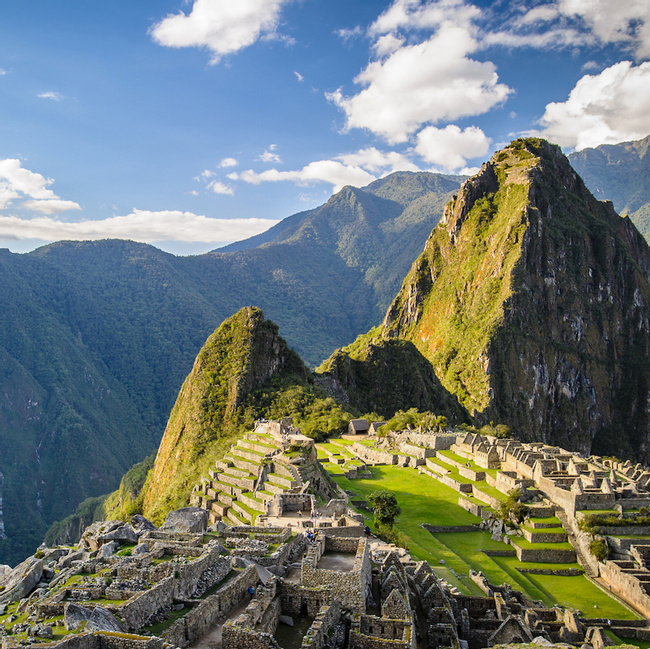
How Peru Plunged Into Political Crisis
Read Time:4 Minute, 10 Second
How Peru Plunged Into Political Crisis: A Cycle of Instability Explained
Peru, a nation rich in culture and history, has become synonymous with political chaos. With six presidents in the last five years and a constant state of turmoil, the country is trapped in a debilitating cycle of crisis. But how did one of South America’s economic success stories descend into such profound instability?
The answer lies not in a single event, but in a perfect storm of structural weaknesses, a fractured political landscape, and a trigger that pushed the system to its breaking point. This article unravels the complex web of factors that led to Peru’s ongoing political crisis.
The Tinderbox: Structural Causes of Peru’s Instability
Long before the dramatic events of recent years, the foundations of Peruvian democracy were fragile. Several key factors created a tinderbox ready to ignite.
- A Weak and Fractured Party System: Unlike its neighbors, Peru lacks strong, institutionalized political parties. Most are personalist vehicles for individual leaders, built around personalities rather than ideologies or platforms. This means politicians have no long-term party loyalty, coalitions are fleeting, and Congress is perpetually fragmented, making effective governance nearly impossible.
- The Power of “Vacancia”: A Constitutional Double-Edged Sword: The Peruvian constitution allows Congress to remove a president for “permanent moral incapacity”—a vague term that was originally intended for serious medical issues but has been weaponized as a political tool. This low bar for impeachment has led to a legislative-executive power struggle, where opposition-controlled Congresses repeatedly use this mechanism to oust presidents they disagree with.
- Profound Social and Regional Divides: There is a deep chasm between the affluent, mostly urban, coastal elite (especially in Lima) and the poor, largely Indigenous populations of the rural Andes and Amazon. These groups feel excluded from political power and economic prosperity, leading to widespread distrust in the state and its institutions.
The Spark: The Presidency of Pedro Castillo (2021-2022)
The election of political outsider Pedro Castillo, a rural teacher and union leader from a left-wing party, in 2021, poured gasoline on this smoldering tinderbox.
- A Hostile Congress from Day One: Castillo, with no experience in national politics, faced a legislature dominated by a fierce opposition from the start. His presidency was characterized by high turnover in his cabinet (he had over 80 ministers in 18 months), numerous corruption allegations, and relentless investigations from Congress.
- The Failed Coup Attempt: The crisis reached its climax on December 7, 2022. Facing his third impeachment vote, Castillo attempted a “self-coup” (autogolpe). He announced the dissolution of Congress, the installation of an “exceptional emergency government,” and the restructuring of the judiciary. The move was widely condemned as unconstitutional.
The Explosion: The Rise of Dina Boluarte and Deadly Protests
Within hours of his announcement, Congress voted overwhelmingly to remove Castillo. He was arrested and is now in pre-trial detention. As mandated by the constitution, his vice president, Dina Boluarte, was sworn in as Peru’s first female president.
This transition, however, did not restore calm. It triggered a massive explosion of public anger.
- Legitimacy Crisis: For many of Castillo’s supporters, particularly in the marginalized south, Boluarte was an illegitimate “usurper.” They saw Castillo’s removal not as a defense of democracy, but as a political coup by an elite-controlled Congress that never accepted their elected president.
- Deadly Protests: Widespread protests erupted across the country, demanding Boluarte’s resignation, the dissolution of Congress, immediate new elections, and a new constitution. The government’s response was a heavy-handed security crackdown. The ensuing violence led to dozens of civilian deaths, marking the worst political violence in Peru in over two decades and drawing condemnation from international human rights groups.
The Aftermath: A Nation Stuck in a Rut
Today, Peru remains deeply mired in its crisis. President Boluarte, surviving multiple impeachment attempts herself, has seen her approval ratings plummet to historic lows. The protests, while less frequent, continue to simmer, and the social rift has never been wider.
The fundamental problems persist:
- A Deeply Unpopular Government: Boluarte governs with no popular mandate and relies on the support of a conservative Congress, further eroding her legitimacy in the eyes of protesters.
- A Still-Dysfunctional Political System: The cycle of impeachment and political infighting continues, with no consensus on how to break it.
- Unaddressed Grievances: The underlying social and economic exclusion that fueled Castillo’s rise remains completely unaddressed.
Conclusion: A Crisis of the System, Not Just Individuals
The Peruvian political crisis is often framed as a story of corrupt or incompetent leaders. However, this misses the larger point. The crisis is fundamentally systemic. The combination of a weak party system, a constitution that encourages confrontation over cooperation, and deep-seated social inequality has created a machine that generates instability.
Until Peru’s political class undertakes profound structural reforms—including rewriting its constitution to create a more balanced system of government and building inclusive political institutions—the cycle of crisis is likely to continue, with no clear end in sight.


Happy
0 %

Sad
0 %

Excited
0 %

Sleepy
0 %

Angry
0 %

Surprise
0 %
 0
0
 0
0