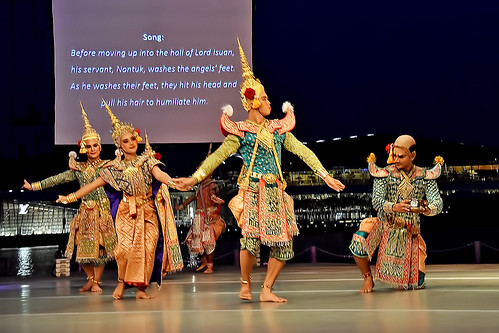
Thai classical dance : prelude dance of the royal Khon performance
Read Time:3 Minute, 57 Second
A Guide to History, Styles, and Meaning
With its shimmering silk costumes, intricate golden headdresses, and impossibly graceful movements, Thai classical dance is more than just a performance; it is a living, breathing embodiment of Thai culture and spirituality. This ancient art form, developed over centuries within the royal courts, tells stories of gods, kings, and mythical creatures through a complex and beautiful language of gesture.
For any visitor to Thailand or lover of world cultures, understanding this dance form is key to understanding the soul of the nation.
A Dance Born in the Royal Court
Thai classical dance, known in Thai as “นาฏศิลป์” (Natasilp), has its roots deeply embedded in the history of the Thai monarchy. It was primarily developed and preserved within the walls of the royal palace, serving as entertainment for the king and his court and as a crucial part of royal ceremonies.
Its origins are a blend of indigenous Thai traditions and influences from neighboring cultures, most notably Khon, the ancient dance-drama of the Khmer Empire. Over time, Thai kings became great patrons of the arts, refining the dance into the highly stylized and sophisticated form we see today.
The Language of Gesture: What the Movements Mean
Every single movement in Thai classical dance is deliberate and carries specific meaning. Dancers spend years, often starting in childhood, mastering the 68 fundamental poses, or “แม่บท” (Mae Bot).
-
Hand Poses (Mudras): The elegant, curved fingers are not just for beauty. Each hand gesture can represent specific objects, actions, or characters—from holding a flower to depicting a mythical being.
-
Footwork and Stance: The slow, deliberate steps and deep pliés create a sense of weightlessness and grace. The dancer’s posture is always angled, never fully facing the audience, creating a sense of otherworldliness.
-
Facial Expressions: While often serene, the dancer’s expressions subtly convey the emotions of the story. The eyes, in particular, are used to direct the audience’s attention and express feeling.
The Major Styles of Thai Classical Dance
There are several distinct forms of Thai classical dance, each with its own purpose and characteristics:
-
Khon (ขุน): The most prestigious form, Khon is a masked dance-drama depicting scenes from the Thai national epic, the Ramakien (the Thai version of India’s Ramayana). It features elaborate, demonic masks for male characters, intricate armor, and a narrator who chants the story. It traditionally featured only male performers, though this has evolved.
-
Lakhon (ละคร): More graceful and lyrical than Khon, Lakhon often tells folk tales or love stories from the Ramakien. Dancers do not wear masks, allowing for more expressive facial acting. There are several sub-genres, including Lakhon Nai (performed by women inside the court) and Lakhon Nok (performed by men outside the court).
-
Hun Lakhon Lek (หุ่นละครเล็ก): Also known as Thai puppet theater, this is a unique art form where dancers manipulate intricately carved puppets, mimicking the movements of classical dance. A single character often requires three puppeteers to bring it to life.
-
Fawn Thai (ฟ้อนไทย): These are traditional folk dances from various regions of Thailand. They are generally more lively and accessible than the court dances, often performed at festivals and cultural events to welcome guests. The Fawn Leb (Fingernail Dance) from the north, where dancers wear long metal fingernails, is a famous example.
The Complete Performance: Music and Costume
The dance is inseparable from its musical and visual components.
-
Music: The orchestra, known as the “Piphat”, provides the soundtrack. It is dominated by percussive and woodwind instruments, such as the ranat ek (xylophone), pi (oboe), and various types of gongs and drums. The music is rhythmic and hypnotic, perfectly synced with the dancers’ movements.
-
Costume: The costumes are works of art in themselves. Made from the finest Thai silk and brocade, they are adorned with intricate gold jewelry, beading, and, for certain characters, ornate headdresses that can be incredibly heavy. Every element of the costume signifies the dancer’s role and status.
Where to See Thai Classical Dance Today
While once reserved for royalty, Thai classical dance is now a celebrated national treasure accessible to all. You can witness breathtaking performances at:
-
Cultural centers like the Sala Chalermkrung Royal Theatre or The National Theatre in Bangkok.
-
Thai restaurants and hotels that host cultural shows for tourists.
-
Temple festivals and important national holidays.
A Living Heritage
Thai classical dance is not a relic of the past but a vibrant and evolving art form. It is a powerful symbol of Thai identity, a testament to the nation’s rich history, and a captivating window into its soul. To witness a performance is to be transported to a world of myth, grace, and profound beauty—an experience that stays with you long after the final curtain falls.


Happy
0 %

Sad
0 %

Excited
0 %

Sleepy
0 %

Angry
0 %

Surprise
0 %
 0
0
 0
0